
The Pyrex Special Effect
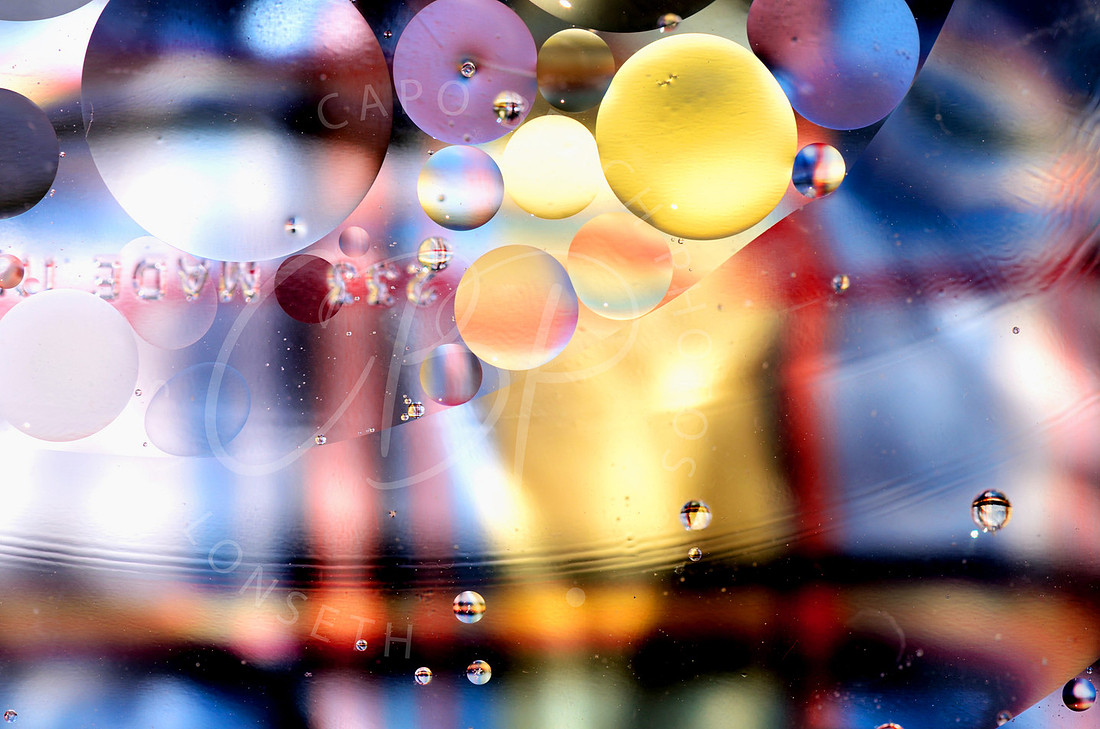
 The Pyrex Factor-
Before I delve into the above photograph and the reason for this post, a brief history of the kitchenware I used to help create this special effect is warrantied. It will be brief and the explanation will make some sense.
There are few people, men or women alike, working in a modern day kitchen that have not used or at least heard of Pyrex. A heat resistant (to temperatures of 425°F or 218°C), chemical resistant and extreme cold resistant glass product used in everything from see-through glass casserole bowls and pans to glass measuring cups. (It has been documented that extreme fluctuation of temperature or direct exposure to a heat source can cause breakage.) The product has seen an enduring longevity since 1915 when it was first introduced by Corning Glass Works to the American general public for use in their homes. However, the product originally started out called Nonex (short for non-expanding) in 1908, invented by Corning Glass Works for industrial laboratory use such as battery jars and railroad signal signs. However, that product used lead and borosilicate glass.
Corning Glass Works removed the lead from their first 1915 consumer product advertised as a pie plate.
In 1936, Corning purchased a company named the MacBeth-Evans Glass Company and that plant in Charleroi, Pennsylvania produced another Pyrex product known as opal ware bowls and bakeware made of tempered soda-lime glass. The decorative glassware was not clear but rather had a milky white appearance and was often used as serving dishes and glassware for decades. Coloring agents were sometimes added to give their glassware a see-through colored look.
In 1998, Corning Ware separated itself from its consumer products division and eventually became Corelle Brands in 2018.
The special effects photograph above was created using a Pyrex clear glass casserole pan. If you look closely, that evidence can be seen (though it be upside down and backwards in the photo) by the embossed symbols in the glass pan bottom by the words: "233" MADE IN USA. (The 'USA' is not visible in the photo). The wavy lines you also see are embossed in the glass by the manufacturer. The numbers 233 means it is a 3 quart by 2" deep dish glass pan and a truly authentic Pyrex brand.
The photo was created with a Nikon D7000 DSLR camera on a tripod with a 85mm lens, no metering pattern, f/8 at 1/250s.
But here lies the trick to getting the array of bubbles and color. Under the glass pan was laid an India Madras shirt I still had from the 1960's. I knew there would be another use for it someday and here it is ! The colors were still strong and vibrant as it was originally. These shirts are still available but a little more pricey than they use to be in that they have gained some popularity again. Laid flat under the glass pan, the pan was elevated up about one inch, an inch of water added to the pan and several droppings of different oils such as olive oil, cooking oil and 3-in-1 lubricating oil. All had just a little different coloring. The combination of these three oils brings their own "bubble" characteristics and intrinsic values to the effect, in viscosity, color and translucency. The secret was not to hurry the process. These different sized bubbles and their coloring needed to develop on their own time table including finding their own place in the universe as it were. The colors from the shirt under the pan shines thorough differently in each bubble, some more vibrant than others. From a technical standpoint, there is a bit of light refraction going on through the glass pan and oil bubbles. Patience and vigilance is the key. The timing of the camera shutter release is also vital. I set the camera to a "burst mode", continuous images shot so as to capture multiple color and light combinations. Lighting is best suited to being placed in daylight, though artificial light sources could also be used. Different colors means placing the pan at different locations of the shirt. This shirt is only what I used, but any flat source of multiple color could be used. The more vibrant the better.

