
Crater Lake Oregon
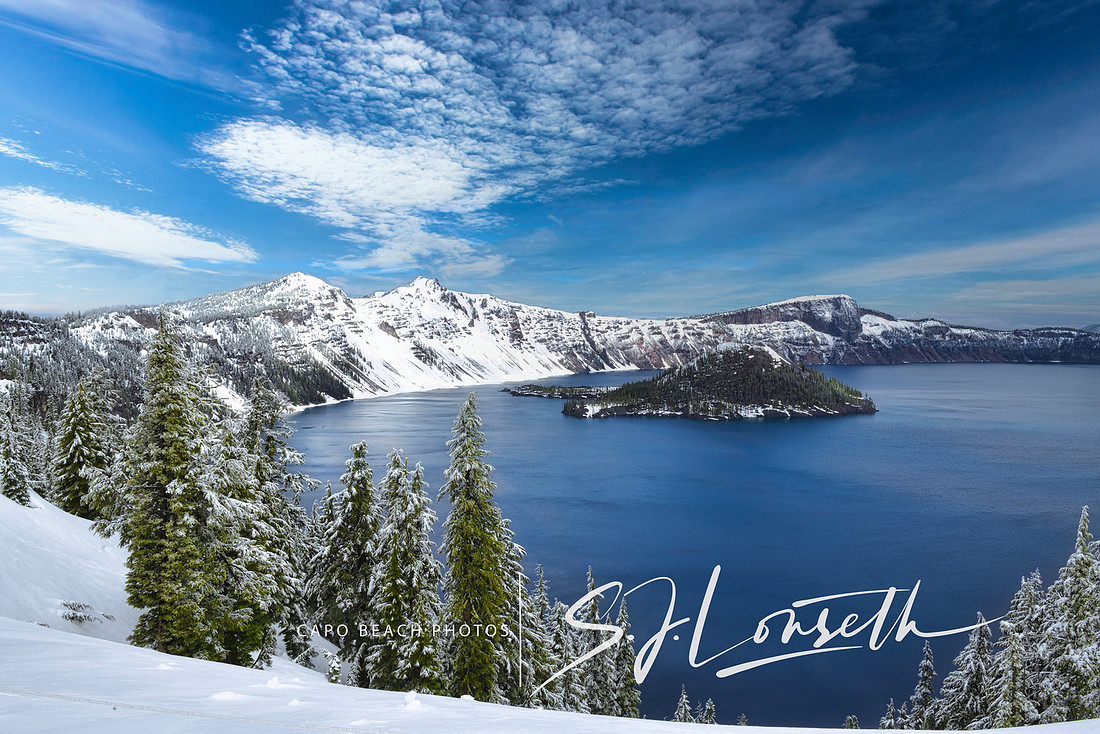 Crater Lake_Oregon

Crater Lake
One of the most beautiful alpine lake settings in the western U.S., maybe in all of the country, is Crater Lake, with perhaps a close rivalry to Lake Tahoe. It is ranked as the deepest natural lake in the United States. The water has been described by many as crystal clear deep blue. The first recorded discovery of Crater Lake by European explorers was by a gold mine prospecting party in 1853 exploring the upper Rogue River Valley for possible gold mines. They recorded that the lake should be named Deep Blue Lake. By 1870 it had been determined that Crater Lake should be part of a designated national park and the area began being surveyed by the USGS in 1885. By 1902, Theodore Roosevelt and the U.S. Congress made it so.
This caldera formed lake resulted from the catastrophic eruption and collapse of 12,000 foot high Mount Mazama some 7700 years ago. Archeologists have discovered that the area was inhabited by native peoples such as the Klamath long before the eruption occurred. Volcanologists have determined that all living beings within a twenty mile radius were decimated and the surrounding area covered in about 200 feet of ash and pumice stone. Archeologists have discovered in local area digs, remnants of local native tribes' pottery, utensils and some human and animal remains. Geologists see visible indications on above water and underwater rock cliffs indicating Mount Mazama was covered with glaciers. Atmospheric deposits of the eruption have been found as far north as Alberta, Canada. Three major under water domes or cinder cones formed within about 750 years of the first eruption but none are still visible above the water level with the exception of Wizard Island as seen in the snow covered photo above. Only about 2% of this cinder cone is visible above the water. Heavy steam clouds have often been seen rising from the island. The only other major above water formation in the lake is Phantom Ship Island. It is not the beginning of a new cone formation but rather a natural rock formation. The major beginnings of possible future mountain peaks could form from the existing Merriam Cone and the Rhyodacite Cone which are currently below water. The deepest part of the lake is 2,000 feet while the average depth of the lake is 1,148 feet. The highest part of the remaining volcanic rim is at an elevation of about 8,000 feet above sea level. There are currently 161 volcanoes listed as potentially active in the U.S. Crater Lake is currently ranked at #17 as a potentially active future volcano.
While the climate is classified as sub-alpine, summer days can be mild and dry. Winters are ruled by harsh, cold weather where heavy snowfall years can be as much as 463 inches, or 11.76 meters. This photo was taken in early November of 2016. The lake has no defined water outlets nor inlet sources. Primary inflows are precipitation and snowfall. Outflows are through evaporation and subsurface seepage. There are several trails down from the rim that can be taken to reach the lake shore. The main one is Cleetwood Cove Trail which leads to a marina and small lake shore recreation area. It has been closed for remedial trail repairs, rock slide embankment fortifications and for a new dock which began in the spring of 2026 and is scheduled to re-open again in spring of 2029. From this new marina visitors can take a boat tour of the lake.
Located in Crater Lake National Park, Oregon and managed by the U.S. National Park service, the park is open year round for recreational sports such as cross country winter skiing but public facilities and roads can often be closed for extended periods due to icy and large snowfall amounts. There are some 29 listed trails open to the public.

Comments
|
January
February
(6)
March (6)
(9)
April (9)
(7)
May (7)
(7)
June (7)
(4)
July (4)
(5)
August (5)
(4)
September (4)
(4)
October (4)
(4)
November (4)
(1)
December (1)
|
(2)
January (2)
(2)
February (2)
(2)
March (2)
(2)
April (2)
(1)
May (1)
(1)
June (1)
(1)
July (1)
(2)
August (2)
(1)
September (1)
(2)
October (2)
(1)
November (1)
(1)
December (1)
|
(1)
January (1)
(1)
February (1)
(1)
March (1)
(1)
April (1)
(1)
May (1)
June
July
(1)
August (1)
(2)
September (2)
(1)
October (1)
(1)
November (1)
December
|
(2)
January (2)
(1)
February (1)
(1)
March (1)
April
(1)
May (1)
June
(1)
July (1)
(1)
August (1)
September
(1)
October (1)
(1)
November (1)
December
|
January
(1)
February (1)
(1)
March (1)
April
May
(1)
June (1)
(1)
July (1)
(1)
August (1)
September
(1)
October (1)
November
(1)
December (1)
|
January
(1)
February (1)
(1)
March (1)
April
(1)
May (1)
June
(1)
July (1)
August
September
(1)
October (1)
November
(1)
December (1)
|
January
(1)
February (1)
(1)
March (1)
(1)
April (1)
May
June
July
August
September
October
November
December
|
(1)
January (1)
(1)
February (1)
March
(1)
April (1)
May
June
July
August
(1)
September (1)
October
November
December
|
January
February
March
April
May
June
July
August
September
October
November
December
|
January
February
March
April
May
June
July
August
September
October
November
December
|
(1)
January (1)
(2)
February (2)
March
April
May
June
July
August
September
October
November
December
|
January
February
March
April
May
June
July
August
September
(1)
October (1)
November
(1)
December (1)
|
(1)
January (1)
February
(1)
March (1)
(2)
April (2)
(1)
May (1)
(1)
June (1)
July
August
(1)
September (1)
October
(1)
November (1)
December
|
