|
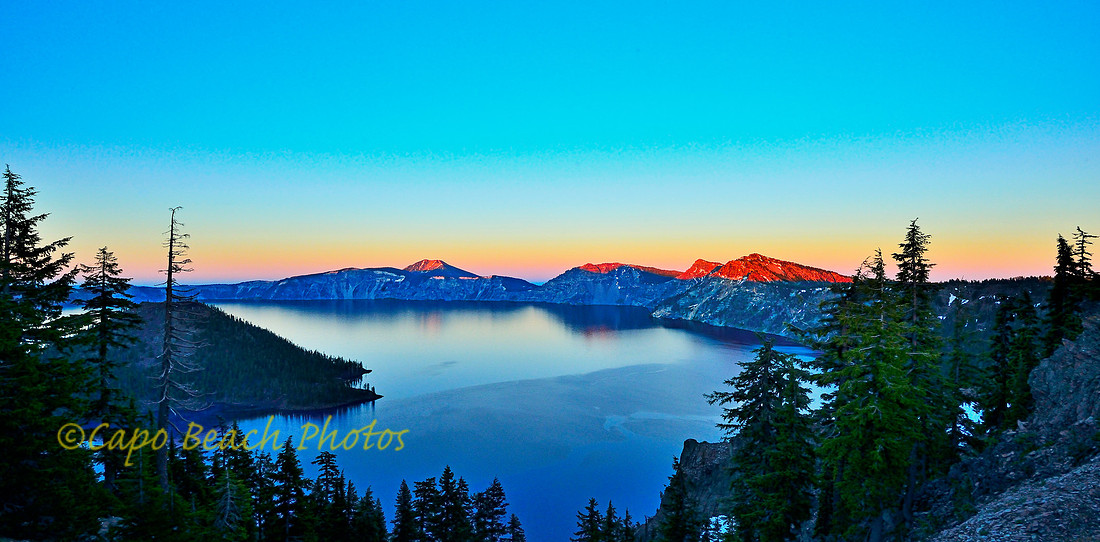
Bloggin' the Whole Story Thanks to everyone who frequents this website for the photos and blogs. On this blog site there will be a variety of photos and descriptive posts. Some posts involve extensive research, both from talking to locales and supplemented from the internet, while others are posted for the simple photo alone. Please enjoy and don't be afraid to give back your comments, good or bad. Mystery CalderaThe Mysteries of Crater Lake At a depth of 1,943 feet and covering 12 square miles, Crater Lake in Oregon is the deepest freshwater lake in the U. S. The Lake is the result of a collapsed volcano known as Mount Mazama. After the central spine of magma of the mountain was exhausted, the peak fell in on itself leaving a giant bowl of ash and stone called a caldera which now holds the deep blue colored majestic Crater Lake. The peak of the previous mountain is now exposed in the lake and is called Wizard Island, shown to the left hand side of this photo. Located in the Cascade mountain range of southern Oregon, local Indian tribes, including the Modoc tribe, have long thought of the lake as bottomless and where dark spirits dwell. Their strict taboos have permanently labelled this lake as the "Lake of the Lost". According to the Klamath Indians, looking into the depths of the deep blue colored lake will bring death and lasting sorrow. Local Indians would never face directly toward the lake but placed their backs to the Lake while hunting. Crater Lake holds many mysteries and strange occurrences. Over the years many planes have disappeared into the Lake including military training aircraft from what was once a nearby Army air base. No human remains have ever been recovered from any of those crashes. Since 1926 alone, thirteen deaths have been directly attributed to the geography of the Crater Lake area. Three were photographers who got too close to the steep cliffs and fell all the way down to the Lake surface, nearly 2000 feet in many places. Another tale is of a young photographer who was to take a week photographing the Lake and the heavily wooded surrounding slopes. After two weeks an extensive search was undertaken to find him without success. After a year, two hikers found his shirt and pants, undisturbed by any animals, sitting stiff and upright on a log with no coat, boots nor body to be found. The pants were unbuttoned but his belt was missing. One sock was found with toe bones inside. Twelve miles away from that scene park rangers located the belt and the top of his skull. No boots were ever found. This photo was taken around 8:30PM on June 29th as the sun was setting at my back. Mosquitoes were so thick and hungry that a long exposure photograph would have been near impossible. A handheld Nikon D800 was used with a 16mm lens, 1/30th shutter speed at f/16 and an ISO of 800. The brilliant colors of the setting sun at my back can be seen on the caldera rim beyond. Fishing
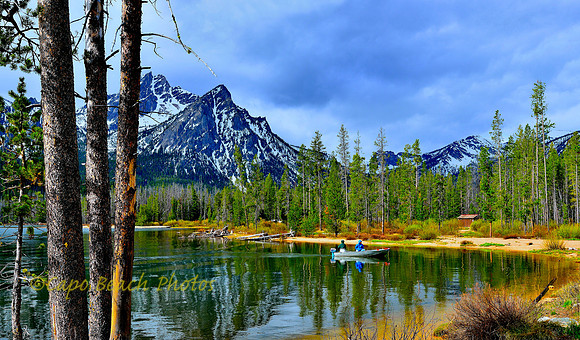
This week's blog is not a photograph of a sunset nor a lighthouse with a mysterious history, but rather as something a little different, just a soothing pastoral image of Stanley Lake in the Sawtooth Mountains of Idaho with both 9,860 foot high McGown Peak and the smaller Elk Peak in the background. These fishermen were enjoying a calm Saturday morning in early spring out on the Lake. While campgrounds are located all around the north and west sides of the lake, campers were sparse that morning due to the chilly early spring conditions. Stanley Lake is stocked by the Idaho Department of Fish and Game with cutthroat, rainbow and lake trout. Steelhead is seasonal but abundant depending on the year. Snake River sockeye salmon were once present as well but downstream dams on the river now prevent any return of the salmon to the Lake. Located in Custer County Idaho, about 7 miles from the town of Stanley, the Lake is nestled at the fringe of the Sawtooth National Recreation Area and at the base of the Sawtooth Mountains. The lake is about 1 mile long, 1/2 mile across and is at a surface elevation of 6,513 feet above sea level. Photo image was taken with a Nikon D800, 35mm lens at 1/100, f/16 to help intensify the clouds, used with flash to highlight the tree bark to the left and with an ISO of 250. Oh That Ole Hanson
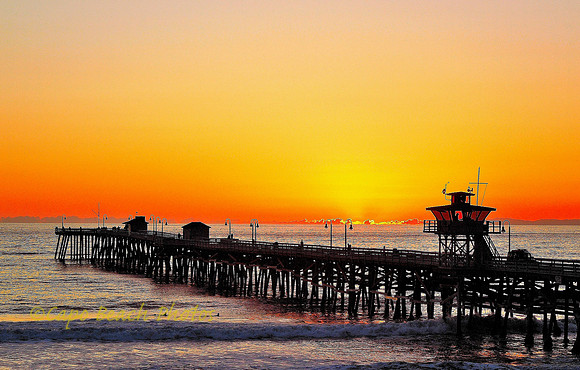
"I have a clean canvas and I am determined to paint a clean picture. . . think of it - a canvas 5 miles long and one and one-half miles wide." That is what Ole Hanson, former mayor of Seattle, said about developing the City of San Clemente with the help of some wealthy investors. In 1925, after leaving his tenure in Seattle, Hanson founded and developed the "Spanish Village By The Sea" as it is known, from scratch. Developed as one of America's first planned communities, the city was to be the playground for the well-to-do people of Los Angeles as their getaway to surfing, golf, fishing and horseback riding. The Seattle Indians baseball team even called San Clemente home during their winter training camps. Early building requirements, enforced by Hanson included red only tile roofs and white plaster walls ensuring a common theme of Spanish colonial style architecture. One of the more popular icons in San Clemente is the San Clemente pier. Once a prohibition-era smuggling hub, the 1296 foot long pier has survived two major damage-causing storms since it was built in 1928. One storm in 1939 and another in 1983 that tore 400 feet off the end of the pier and washed out 80 feet in the mid-section of the span. In two short years and with $1.4 million, the end of the pier was rebuilt with steel pilings. A restaurant on the pier called Fisherman's Restaurant, owned by a Seattle based group, is a popular staple with locals and tourists. San Clemente's lifeguard Tower Zero is located on the pier as seen in this photo. Surfing is a mainstay in this California surf city and is actually a world surfing destination. It is home to surfing magazines such as The Surfer's Journal, Longboard Magazine and Surfing Magazine to name just a few. Such renown hangouts as the Trestles (Lowers, Middles and Uppers), Riviera, Lost Winds, The Hole, The Pier, T-Street and North Beach are popular year-round due to the mediterranean-like climate. Average annual temperatures are around 70 degrees with about 342 days of sunshine. The "Spanish Village By The Sea" has been home to such notables as Lon Chaney, Jr., Carl Karcher (founder of Carl's Jr.), Olympic volleyball gold medalist Karch Kiraly, Richard and Pat Nixon, Chicago Bears football player Brian de la Puente and such surfing greats as Shane Beschen, Mike Parsons, and Kolohe Andino.
Fantastic Island
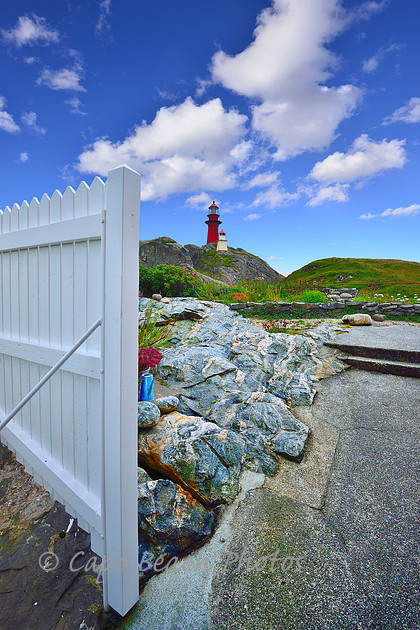
While it is true I am very partial to Norway, the island of Ona would captivate most travelers seeking a quiet, remote and exotic location to visit. I say "exotic" because it is unique as a travel destination. My parents were both born in Molde Norway and immigrated to the U.S. in 1950. I was born in Seattle but have journeyed back to Norway four times with my parents and four times with my family or with just my wife. My wife is always thrilled to visit Norway,my second homeland, especially since all my remaining relatives treat us like honored guests every time we see them. We have travelled much of Norway but there are always a few special places we will remember the rest of our lives. Ona Island is one such place. On our most recent trip to Norway in August of 2013, we ventured to the Island of Ona with two of my closest Norwegian cousins and one of their husbands. It took a long ferry cruise since this remote island is located a considerable distance to the west into the Atlantic Ocean. Actually two smaller islands are combined together to be called Ona and inhabited by only about 40 people. Livelihoods had been based on the fishing industry which has been gradually diminishing over the last 50 years. The island population still fishes but is now mostly a tourist destination though the island can only accommodate a few hundred people at any one time. There is a famous cast iron lighthouse, seen in this photo, built in 1867 which is located at the top of the island's 130 foot high cliff known as Onakalven. Automated in 1971 the lighthouse still uses the original Fresnel lens. A thousand years ago the island was occupied by Vikings and a cemetery on the southeast side of the island has many unmarked Viking grave stones. While the two islands can be entirely walked in just a couple of hours, I have included a link to a YouTube drone video fly-over from 2013 of beautiful Ona Island that takes just a few minutes to watch. Sit back, relax and follow the link at: http://www.youtube.com/watch?v=ISs8mr4kd9s The drone used for this video is quad-prop equipped with an ImmersionRC/Fatshark transmitter and uses a "GoPro Hero 2" HD camera. The drone is controlled from the speed boat you'll see in the video. All credit is given to the makers of this video for a fine job. The background song is performed by a Norwegian artist named Kari Bremnes. Beautiful. My photo? Oh yeah, taken with a hand-held Nikon D800, 16mm lens, shot at 1/25, f/14 with the ISO at 250, no flash was used. Shrimp Feast at Mono Lake
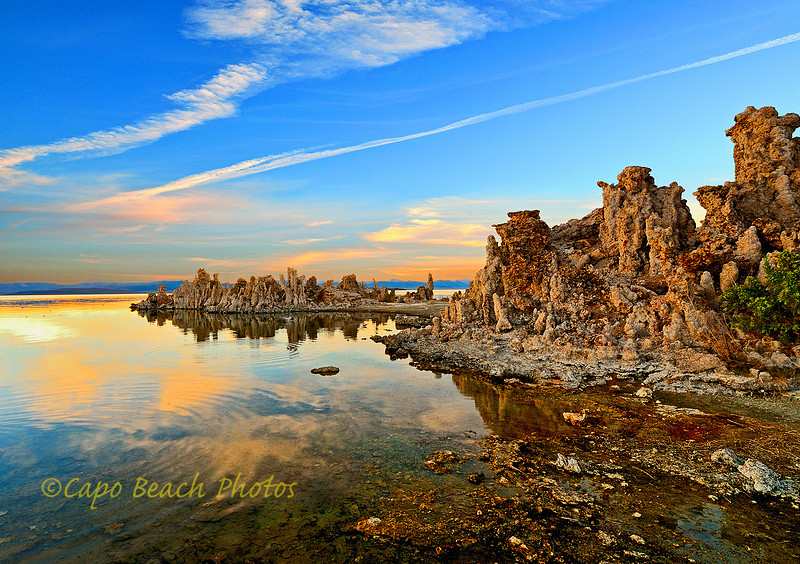
Nestled in the high desert plateau of the eastern Sierra Nevada in California is Mono Lake Tufa State Reserve covering over 65 square miles. A shallow lake of only 157 feet at its deepest, the Lake average is at around 52 feet and has no natural outlet to the ocean. The high alkaline content does not create a natural habitat for fish and even despite efforts by the California Department of Fish and Game, no fish exist in the Lake. The reason: the lake has a pH level of 10, three times saltier than the Pacific Ocean. The Lake is considered to be a "triple-water" lake due to its content of chlorides, carbonates and sulfides, a deadly combination to most water life with the exception of algae, alkali flies and brine shrimp. Birds feast on the flies and brine shrimp. The shrimp population has made a comeback but at one time the shrimp were so abundant the Lake was considered one of the most unique reproductive ecosystems in the world. Even now migratory birds by the millions, literally three million a year, stop, rest and nest during their long journeys. The Lake harbors over 80 species of birds in any given year. In 1941, the Los Angeles Department of Water and Power began a systematic lowering of the lake level by diverting the four major tributary streams that feed Mono Lake. In just 15 short years the Lake's water level fell by 25 feet. By 1975 it was down 40 feet. The Lake changed from a prime example of a highly effective ecosystem to a dying, lifeless chemical sump. But by 1978, the outrage over the fate of the Lake drew much attention and after years of legal battles, drainage had been drastically reduced and water levels stabiized. Water levels are slowly returning to pre-1960 levels, but still a long road to full levels. The lowering of the Lake exposed hundreds of tufas which are shown in this photo looking across the Lake at sunset. These calcium-carbonate spires of limestone are the result of bottom freshwater springs interacting with the alkaline content of the Lake. Some are as high as 30 feet. The overall effect of these tufas creates an eerie landscape of limestone towers across a lake of still water. Mono Lake was the backdrop for the inside cover jacket to Pink Floyd's 1975 released album "Wishing You Were Here". Clint Eastwood's 1973 movie "High Plains Drifter" used Mono Lake as the shoreline for the fictitious town of Lago.
No Corner Utopia
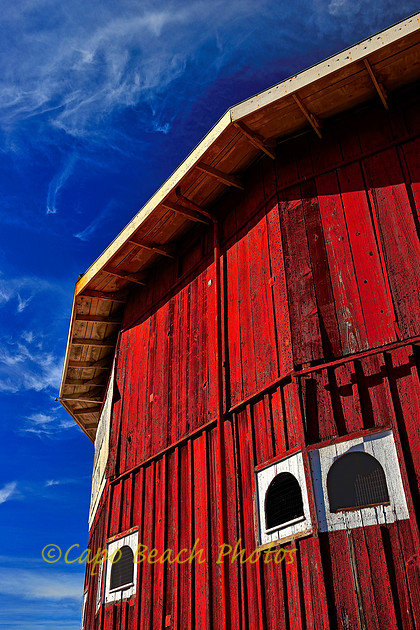
The Fountain Grove township north of Santa Rosa California was settled in 1875 by Thomas Lake Harris, a spiritual mystisist that relocated from his commune in New York. Having had at one time a following of over 2000 in the U.S. and England, Harris in his later years relocated to Santa Rosa. He was the spiritual leader of a commune called the Brotherhood of New Life, a utopian spiritual community whose productive center was one of wine making. Several buildings were built for the winery but it had no center piece of attention. Harris passed on but the manager of the Fountain Grove Winery, Kanaya Nagasawa, hired and directed an carpenter contractor named John Clark Lindsey from Napa to build a barn of some renown in 1899. The plans for the barn were drawn by the commune's resident architect whose name is not recorded. Nagasawa, on the other hand, was the first Japanese immigrant to the area and still remains somewhat of a historic figure in Japan. The 16-sided roundhouse barn housed the horses used for the winery. It is about 70 feet in diameter and almost 60 feet tall. In the day when labor was extensive and machinery minimal, round barns, or at least ones with no corners, were thought to be a more efficient floor plan because farmers could use the floor in a circular motion saving time and money. By the late1890's this utopian communities winery was producing over 70,000 gallons of wine which was about 90% of all wine made in Sonoma County at the time. The production continued until the last members of the commune disbanded in the late 1930's. Nagasawa remained until the end of his life in 1934. This Red Round Barn still stands today though in major disrepair. There have been many grand schemes for the restoration of the barn but none have taken root, including a free offer of the barn to the City of Santa Rosa which was refused. A historic plague on the site and a nearby park is dedicated to Nagasawa and the commune's wine producing activity. |